Paolo Rabino

Research Lead @ mkind · PhD in AI @ Politecnico di Torino

I build learning methods that take robots from understanding 3D scenes to acting on them in real factories: detecting novel and anomalous objects, reasoning about cluttered piles, generating long-horizon motion for surface finishing, and grasping with multiple grippers.

I did my PhD in the VANDAL Lab at Politecnico di Torino and IIT, advised by Prof. Tatiana Tommasi. Today I lead research on Physical AI for industrial surface finishing at mkind in Munich.

Portrait of Paolo Rabino

Publications

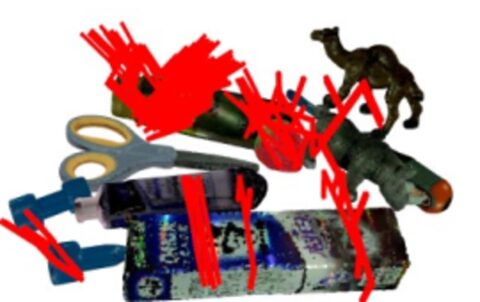
Parallel-jaw and vacuum grasp predictions on a cluttered scene
MultiGraspNet: A Multitask 3D Vision Model for Multi-Gripper Robotic Grasping
S. Ortuno Chanelo, P. Rabino, E. Civitelli, T. Tommasi, R. Camoriano
IEEE Robotics and Automation Letters (RA-L), 2026

One point-cloud model predicts parallel-jaw and vacuum grasps from a shared representation, raising grasp success in real industrial trials.
arXivProject pageBest Poster Award · IROS 2026 workshop
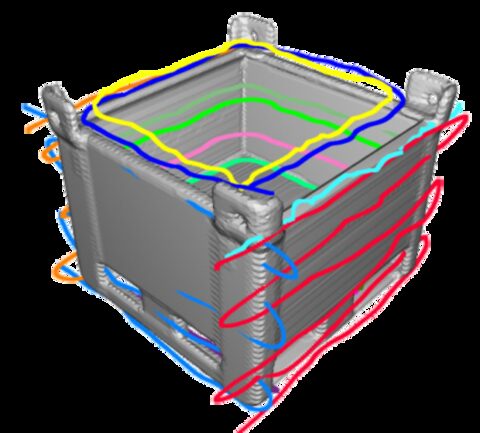
Spray-painting paths generated around a container
FoldPath: End-to-End Object-Centric Motion Generation via Modulated Implicit Paths
P. Rabino, G. Tiboni, T. Tommasi
IEEE/RSJ International Conference on Intelligent Robots and Systems (IROS), 2025

The first end-to-end model that generates multiple long-horizon robot paths as continuous neural fields, with no post-processing. State of the art on robotic spray painting; patent pending.
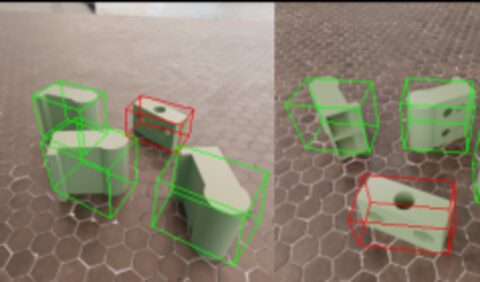
Odd-one-out detection across views of a multi-object scene
Efficient Odd-One-Out Anomaly Detection
S. Chito, P. Rabino, T. Tommasi
International Conference on Image Analysis and Processing (ICIAP), 2025

Finds the anomalous object in a multi-view scene with about a third fewer parameters and roughly 3× faster training than the previous state of the art.
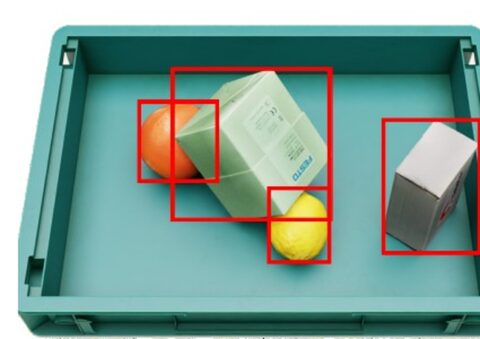
Detected objects in a bin and the order in which to grasp them
A Modern Take on Visual Relationship Reasoning for Grasp Planning
P. Rabino, T. Tommasi
IEEE Robotics and Automation Letters (RA-L), 2025, presented at IROS

D3G detects objects and predicts the dependency graph that sets their grasp order in dense clutter. Its benchmark metric was adopted by UNOBench and the ECCV 2026 challenge.

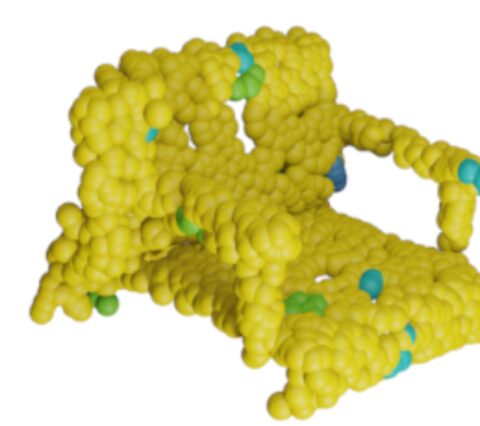
Point cloud colored by patch-level novelty scores
3D Semantic Novelty Detection via Large-Scale Pre-Trained Models
P. Rabino, A. Alliegro, T. Tommasi
IEEE Access, vol. 12, 2024

3D-SeND tells known from unknown objects using frozen pre-trained 3D encoders, with no training and only a few reference samples per class. An earlier version appeared at the ECCV 2024 workshops.

QuadricViT: Efficient 3D Semantic Occupancy Prediction
S. Chito*, P. Rabino*, R. Camoriano, T. Tommasi  (*equal contribution)
Under submission, 2026

Patent

Robotic Path Generator from Point Clouds (Metodo per imparare la generazione del percorso motorio di robot)
P. Rabino, G. Tiboni, T. Tommasi
National and international patent application, Politecnico di Torino, 2025

Experience

Research Lead

mkind · Munich
  • Lead research on Physical AI for surface finishing in high-mix industrial manufacturing.
  • Develop trajectory generation models building on FoldPath, and learn paint deposition from 3D recordings of expert operators.
  • Lead applicant for EuroHPC AI Factory GPU allocations, including a granted 50,000 GPU-hour project.
2026 – now

National PhD in Artificial Intelligence

Politecnico di Torino & IIT, VANDAL Lab · Turin
  • Thesis: From 3D Understanding to Action: Learning Methods for Industrial Robotics, supervised by Prof. Tatiana Tommasi and co-supervised by Prof. Giuseppe Bruno Averta.
  • Industry collaborations on robotic spray painting and multi-gripper bin picking; collaborator in the European BURG project.
2022 – 2026

Co-Founder

Motionness.ai / AnyPath · Turin
  • Co-founded an AI startup for robotic path planning from point clouds, later continued as AnyPath.
  • Built the full MLOps pipeline and full-stack product for learned robotic path generation.
2025 – 2026

MSc in Computer Engineering, cum laude

Politecnico di Torino · Thesis: Deep Learning for Robotic Grasping
2021 – 2022

BSc in Computer Engineering

Politecnico di Torino
2019 – 2021

Projects

QuadricViT kernels

Custom CUDA kernels that aggregate superquadric primitives into a voxel occupancy grid, reformulated in log space to remove the numerical instabilities of the original implementation.

cudapytorch-ext

baylib

C++ library for approximate inference on Bayesian networks. I co-developed the GPU backend: CUDA kernels for logic sampling and likelihood weighting, and OpenCL implementations with a CPU fallback.

cudaopenclc++20

BlokusRL

Custom simulator and environment for the board game Blokus, used to train reinforcement-learning agents.

pythonrl

Awards & Grants

Teaching & Service

© 2026 Paolo Rabino · palettes borrowed from paperqueue